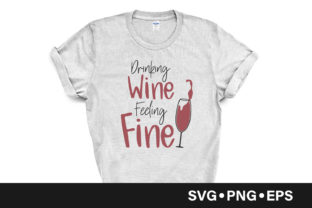
Drinking Wine Feeling Fine Quote Review
As a designer who spends half the day digitizing and the other half troubleshooting tension issues on vintage machines, I don’t just look at an embroidery file; I look at how it will survive the real world. When I first pulled up the Drinking Wine Feeling Fine Quote, my initial reaction wasn’t about the novelty of the phrase itself, but rather its potential as a versatile machine embroidery design for both personal joy and commercial viability. This isn't just another clipart cutout; it’s a graphics asset that carries a specific mood, one that resonates deeply with the modern crafter and the busy small business owner alike.
The product falls squarely into the Crafts category, specifically under Graphics, providing an SVG, a transparent PNG, and an EPS file within a zip folder. For those of us working in the digital space, having these formats is crucial. It means this digital embroidery file can transition seamlessly from a screen to a cutting mat or an embroidery hoop. But does it hold up when stitched? That is the question every Etsy seller and craft business owner needs answered before listing it in their shop.
First Impressions: Mood and Visual Personality
The phrase "Drinking Wine Feeling Fine" taps into a universal sentiment. It’s relatable, slightly humorous, and undeniably marketable. Visually, the design exudes a relaxed, boutique aesthetic. It doesn’t scream for attention with aggressive boldness; instead, it whispers confidence. This makes it perfect for products that need to feel curated and thoughtful. Whether you are creating a personalized gift for a bridesmaid or stocking shelves with small shop product inventory, this quote bridges the gap between casual fun and polished presentation.
From a layout perspective, the text flows in a way that suggests movement without sacrificing readability. The visual personality is warm and inviting, which translates well to soft goods. It feels like it belongs on a cozy weekend morning or a Friday evening unwind session. This emotional connection is what drives sales in the handmade market. Customers aren’t just buying thread and fabric; they are buying a feeling. This design delivers that feeling instantly.
Real-World Application: Where Does It Shine?
I recently tested this concept by envisioning a custom embroidered tote bag design project. Imagine a heavy-duty canvas tote, perhaps in a neutral beige or a deep navy, featuring the Drinking Wine Feeling Fine Quote centered on the front panel. The contrast would be striking, and the message would serve as a conversation starter. It works exceptionally well for custom apparel items like sweatshirts, where the texture of the fleece complements the smooth lines of the lettering.
Beyond apparel, this embroidery project has strong potential in home decor. A tote bag design is obvious, but consider a kitchen towel or a tea towel. The humor pairs perfectly with domestic settings. Furthermore, for those selling holiday embroidery gifts, this quote fits naturally into end-of-year gifting scenarios. It’s not seasonal in a traditional sense, but it is situational, making it a year-round seller for commercial embroidery businesses.
It also lends itself beautifully to baby items, though with a caveat. A onesie or a nursery blanket with this phrase could be a hilarious gift for new parents who appreciate a good glass of wine after bedtime. As a baby embroidery piece, it adds a touch of reality to the often overly sweet world of infant gear. For apparel decorators, adding this to a cap or hat creates a trendy accessory that appeals to a broad demographic.
Technical Considerations and Stitch Clarity
When evaluating any embroidery file, stitch density and detail level are paramount. The Drinking Wine Feeling Fine Quote appears to rely heavily on clean lines, which suggests it may utilize a combination of satin stitches for outlines and fill stitches for background elements if stylized. However, because the exact digitization details are not provided in the source data, designers must exercise caution.
If the design includes tiny decorative accents or intricate script elements, it requires a larger hoop size to ensure clarity. Small details can get lost in the stitching process, especially if the thread colors lack sufficient contrast against the base fabric. I always advise testing such designs on scrap fabric first. Check the stitch density to ensure the fabric isn’t puckering. If the design is too dense for a lightweight cotton tee, it might warp the garment, leading to customer returns.
For applique design applications, the EPS file included in the download is invaluable. You can trace the shapes for precise appliqué work, which adds a high-end, textured look to the final product. This elevates the finished product from a simple stitched patch to a professional-grade textile art piece. Using proper stabilizer is non-negotiable here. Without adequate support, even the best design assets will fail to lay flat.
Where to Use With Caution
While this design is versatile, it is not a universal fit. Avoid using it on highly textured fabrics like chunky knits or bouclé, as the satin stitch edges may not define themselves clearly. Similarly, thin or stretchy fabrics require extra stabilization and possibly a tear-away stabilizer to prevent distortion. Curved surfaces like baseball caps can be tricky; ensure the text curvature aligns naturally with the cap’s dome to avoid visual awkwardness.
Also, be mindful of dark fabrics. If the design relies on light-colored threads, ensure the underlying layer is solid enough to prevent show-through. For dark fabric projects, a backing layer or a contrasting color strategy is essential to maintain the integrity of the embroidery project.
Impact on Brand and Customer Trust
In the world of handmade product sales, professionalism is key. A well-executed embroidered patch or sweatshirt embroidery signals quality. When customers see a crisp, clear execution of the Drinking Wine Feeling Fine Quote, it builds trust. It shows that the seller cares about the details. Conversely, a poorly stitched version can damage your brand reputation instantly.
This design enhances brand consistency for shops that focus on lifestyle, humor, or self-care themes. It allows for cohesive collections. For example, pairing it with other similar quotes on matching sets (like a mug and a towel) increases perceived value. It also aids in printable mockup creation. Since you receive a PNG transparent file, you can easily place the design onto digital templates to preview how it looks on various products before committing to production. This saves time and material costs.
Practical Designer Notes for Success
- Test First: Always run a test stitch on scrap fabric that mimics your final material. This helps you adjust tension and speed.
- Check Contrast: Evaluate the thread colors against the fabric. Low contrast leads to a muddy, unprofessional look.
- Review Details: Zoom in on the SVG or vector file to inspect small corners and curves. Ensure no tiny elements are too fragile for the chosen needle size.
- Black and White Mockups: Convert your design to black and white to check balance and composition without the distraction of color.
- Licensing: Before selling finished items, confirm the license terms. Some files are for personal use only, while others allow commercial sales of physical goods. This is critical for digital product sellers and creative entrepreneurs.
- Stabilizer Choice: Match the stabilizer to the fabric weight. Heavy fabrics need sturdy backing; light fabrics need gentle support.
Ultimately, the Drinking Wine Feeling Fine Quote is a strong candidate for anyone looking to add a touch of wit and warmth to their collection. It is a cut file and silhouette file ready for versatility, but its true power lies in its execution. By paying attention to fabric choice, stitch quality, and presentation, you can turn this simple phrase into a best-selling item. Whether you are a hobbyist making a personalized gift for a friend or an Etsy seller scaling your craft business, this design offers a reliable foundation for creativity.
Remember, the difference between a good craft and a great product is often in the preparation. Take the time to test, refine, and present your work with pride. With the right approach, this embroidery project can become a staple in your repertoire, bringing smiles—and sales—to your customers.